Wednesday, October 15, 2025 – Team Police community gathers for powerful conversation on wellbeing, resilience, and the transformative impact of police sport
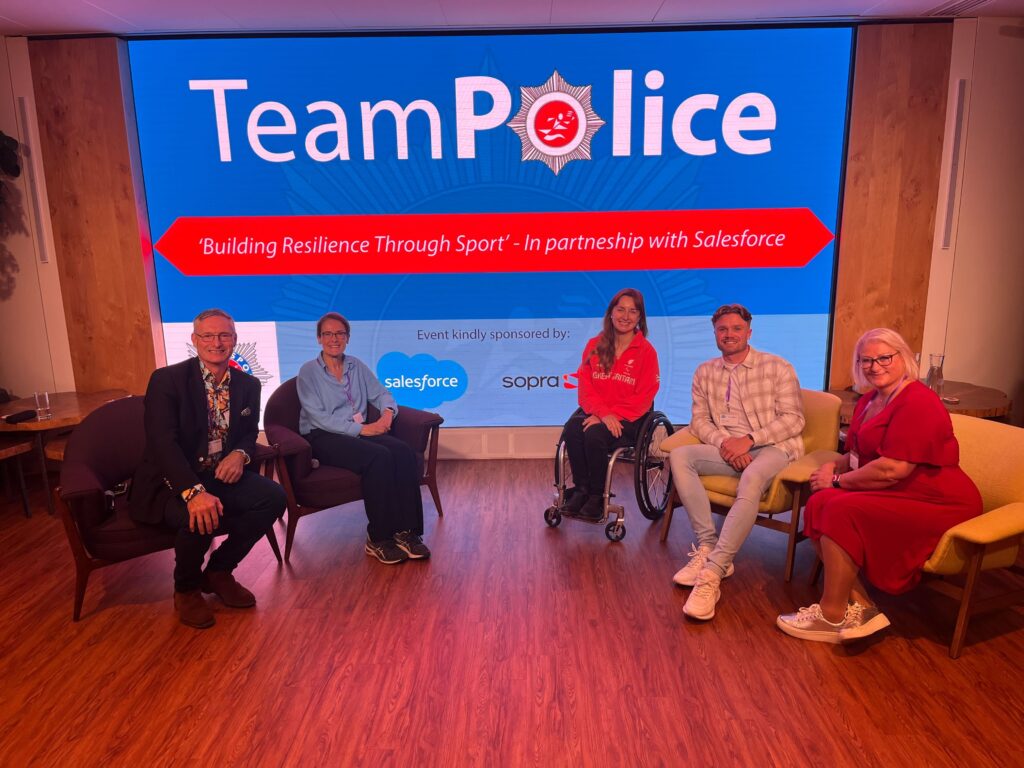
The Team Police community gathered at Salesforce Tower for an evening of inspiration and honest conversation
On Wednesday evening, the Team Police community came together at the iconic Salesforce Tower for what became far more than a scheduled event. It was an evening of raw honesty, powerful storytelling, and collective reflection on why police sport matters, not just for fitness or competition, but for resilience, mental health, and saving careers and lives.
Setting the Scene
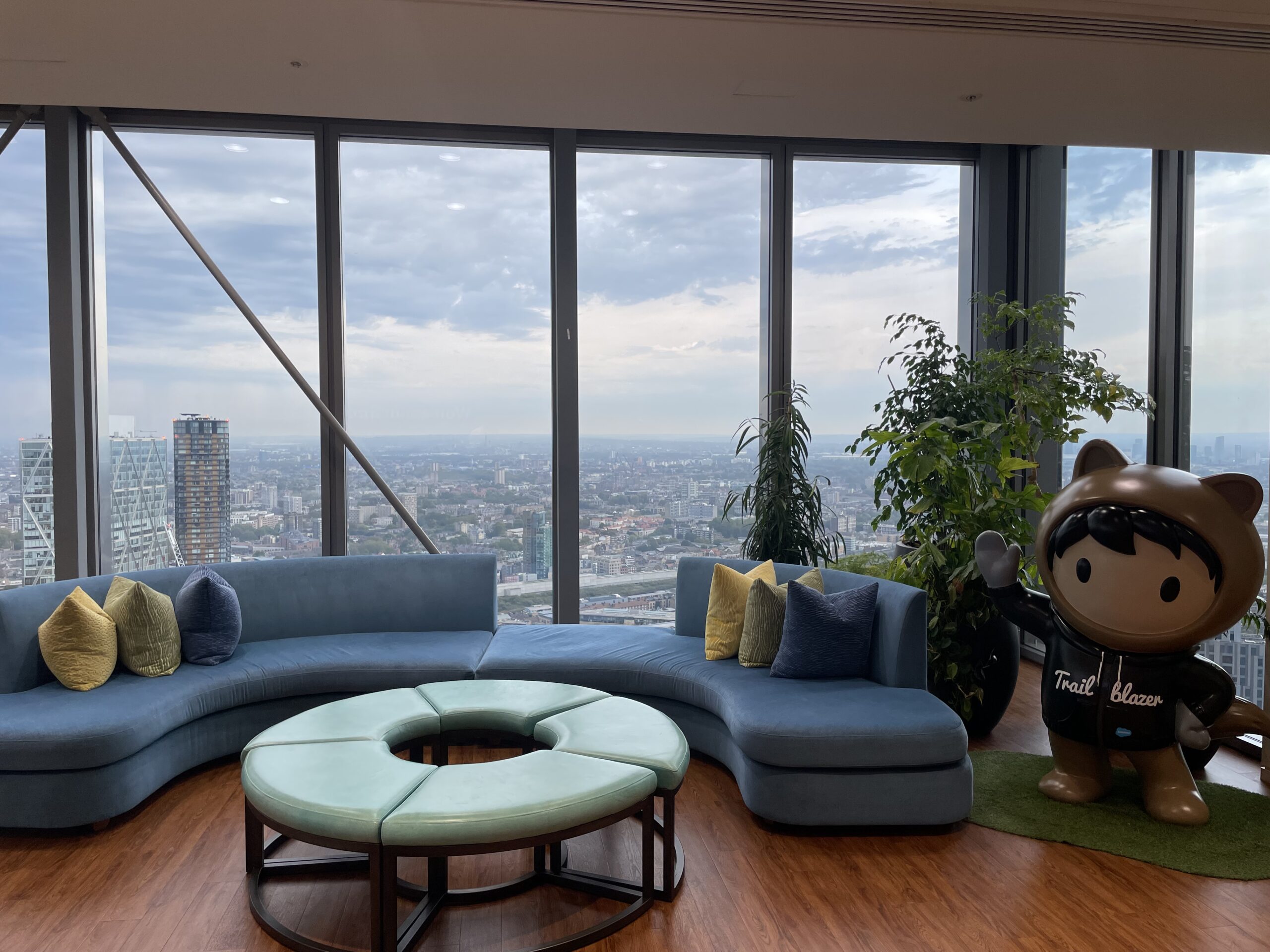
As guests arrived at 5:30 PM for the drinks reception, there was an air of anticipation. The venue, generously provided by Salesforce, offered stunning views and a welcoming atmosphere that set the tone for the meaningful conversations to come. By 6:00 PM, presentations began with three exceptional speakers who would frame the evening’s discussion.
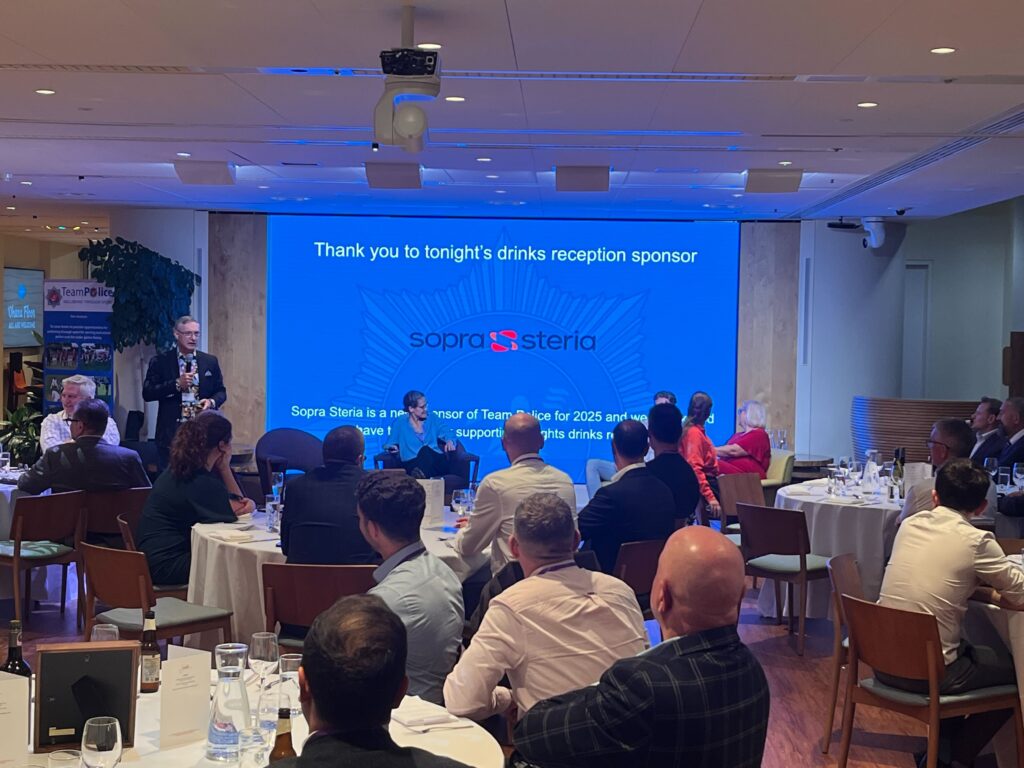
Acknowledging our reception sponsor Sopra Steria, a new Team Police partner for 2025
Our Inspiring Speakers
Issy Bailey
British Paralympic sports shooter who competed at three consecutive Paralympic Games: Rio 2016, Tokyo 2020, and Paris 2024. After a life-changing car accident in 2013 resulted in the loss of use of her legs and full use of her left hand, Issy returned to shooting during recovery and joined the GB Paralympic squad in 2014. She has also competed in wheelchair rugby and wheelchair basketball, demonstrating her versatility as an athlete.
Tey Lynn-Jones
Police Constable with the Metropolitan Police Service, specialising in Emergency Response Policing Team operations for six years. A former professional boxer who won and defended the Southern Area middleweight title, Tey continues to represent the Met Police in running and CrossFit competitions and plays football for EA Borough within the Met. He currently serves as the Response Team driver for A Team West of Ilford, covering Romford, Hainault, Woodford, and Wanstead.
Claire Finn
Head of ICT Governance & Assurance for Thames Valley Police and Hampshire and Isle of Wight Constabulary for eight years, overseeing critical technology governance across two major police forces. As Secretary of the Oxfordshire Girls Football League for eight years, Claire has driven remarkable growth, expanding participation from approximately 750 girls pre-COVID to nearly 4,000 playing every Saturday morning. With over a decade of experience coaching and managing girls’ and women’s football teams, she is a passionate advocate for team sports and their transformative impact.
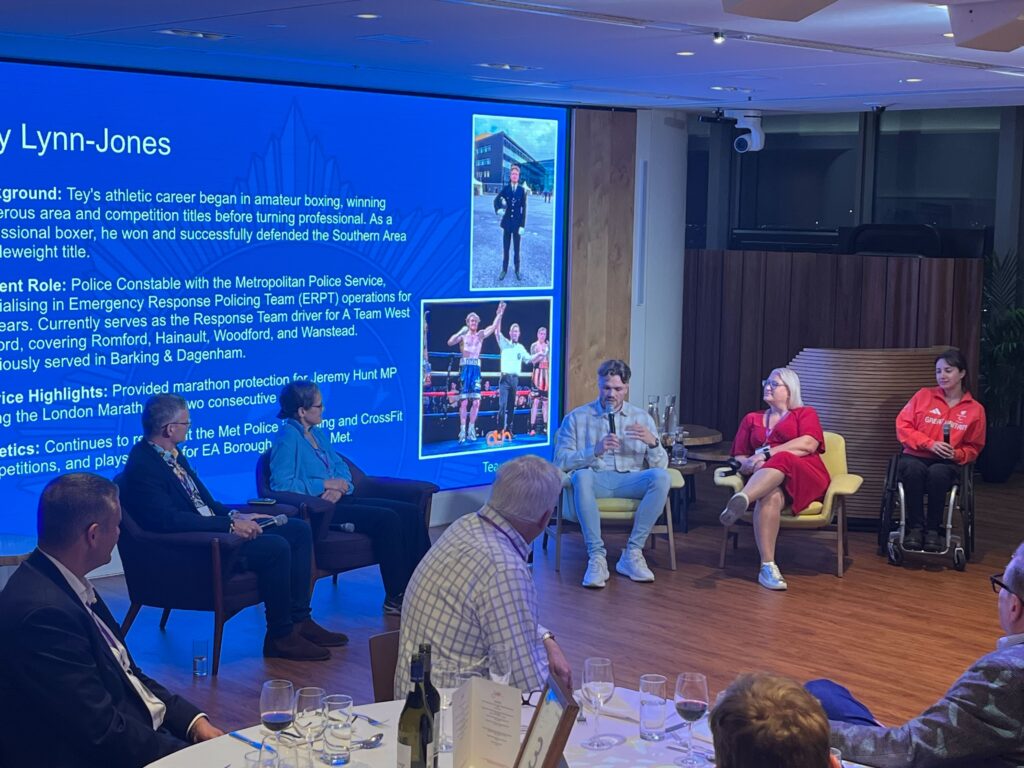
Our speakers in conversation: exploring resilience, sport, and the police experience
Following the presentations, attendees engaged in facilitated table conversations over dinner at 7:00 PM, exploring four key questions about resilience in the context of sport. What emerged were stories that demonstrated, in the most human terms possible, why police sport is not a luxury, it’s essential.
Stories That Stayed With Us
The Southport Responder: When Sport Becomes a Lifeline
A representative from the British Women’s Police Cricket section shared a story that left the room in reflective silence. Last year, one of their best players approached them three weeks before a scheduled tour with difficult news: she didn’t think she could participate.
The reason became clear when she opened up about her experience. She had been the main officer on duty during the Southport incident, a tragedy that shocked the nation. The call came through with language that made it immediately clear this was different from routine incidents. Then, five minutes into her 150-minute journey to the scene, her brother called. He was also a police officer. His daughter attended that dance school.
“She said, ‘I don’t want to come on tour because I will bring the mood down for everybody else.’ My first instinct was, you need to come on this tour.”
After careful dialogue, she agreed to attend, but not to play. When she arrived at the tour, her shoulders were up around her ears. The team had agreed not to ask questions, just to offer the occasional supportive tap on the shoulder and check she was okay.
Over two days, something shifted. Her shoulders dropped. She started laughing. She engaged with teammates. The transformation was visible.
“That wouldn’t have happened if it wasn’t for police sport, and that wouldn’t have happened if it wasn’t for your support. What would she have done if she didn’t go on that tour?”
The answer, as attendees understood, could have been months away from work with no support, watching a valued officer disappear into struggle for potentially months or years. This story powerfully illustrated how sport provides a lifeline during the darkest moments, offering connection and normalcy when officers need it most.
City of London Police: Unity in 12 Hours
Representatives from City of London Police shared their experience with the Summer Games and Winter Games—events that bring together all departments across the force for a single day of competition.
While it’s only 12 to 24 hours of activity, the impact extends far beyond the day itself. These events unite not only police officers but police staff and external partnerships who see what the force is doing and want to support through sponsorship and engagement.
“You see not only resilience towards the individual games, but you see the camaraderie and you see the support across every single team whether you win or lose. It’s about being together for that moment of time and just sharing that experience.”
For a small force like City of London, which has both national and local portfolios, these games bring together individual elements that might otherwise remain disconnected, creating unity across the entire organization. The games demonstrate that even brief sporting events can forge lasting bonds and strengthen organizational culture.
Where Rank Disappears: The Great Equalizer
PC Tey Lynn-Jones provided powerful insight into one of the most unique aspects of police sport events, the complete dissolution of hierarchical structure.
“In the policing world it’s a very disciplined and structured rank system. Me being a PC, I’ll never really see Chief Inspector or above. The only time we see them is for unfortunately bad reasons – they want to come and speak to you because something’s happened. But coming to these events, there’s no uniform, so you’re all on the same level.”
Tey described sitting next to people, engaging in normal conversation, only to discover they’re superintendents or even higher ranks. At PSUK events, that fear and formality disappears completely.
“Everyone’s just there together, everyone’s there just to compete, enjoy, encourage each other, have a laugh, and speak to you as a normal person. Unfortunately in policing, especially in the rank system, there’s a lot of fear – how you want to speak to someone because they’re in the high ranks. But at PSUK that’s gone, that’s out the window. You’re the same level.”
He emphasized that this isn’t just about social comfort, it builds confidence and creates networking opportunities that can transform careers. His own opportunity to provide marathon protection for then-Chancellor Jeremy Hunt for two consecutive years during the London Marathon came purely through a CrossFit event where he met someone he assumed was a PC, who later turned out to be an inspector on the Marathon team.
“PSUK is a massive, massive platform for networking, especially in the policing world. It’s very rare that someone will be in the same area or department for the whole 30+ years of their career. So this is the perfect way to speak to people in different areas and different departments, build that network base that you can perhaps get an attachment or get your foot in the door to see what it’s about.”
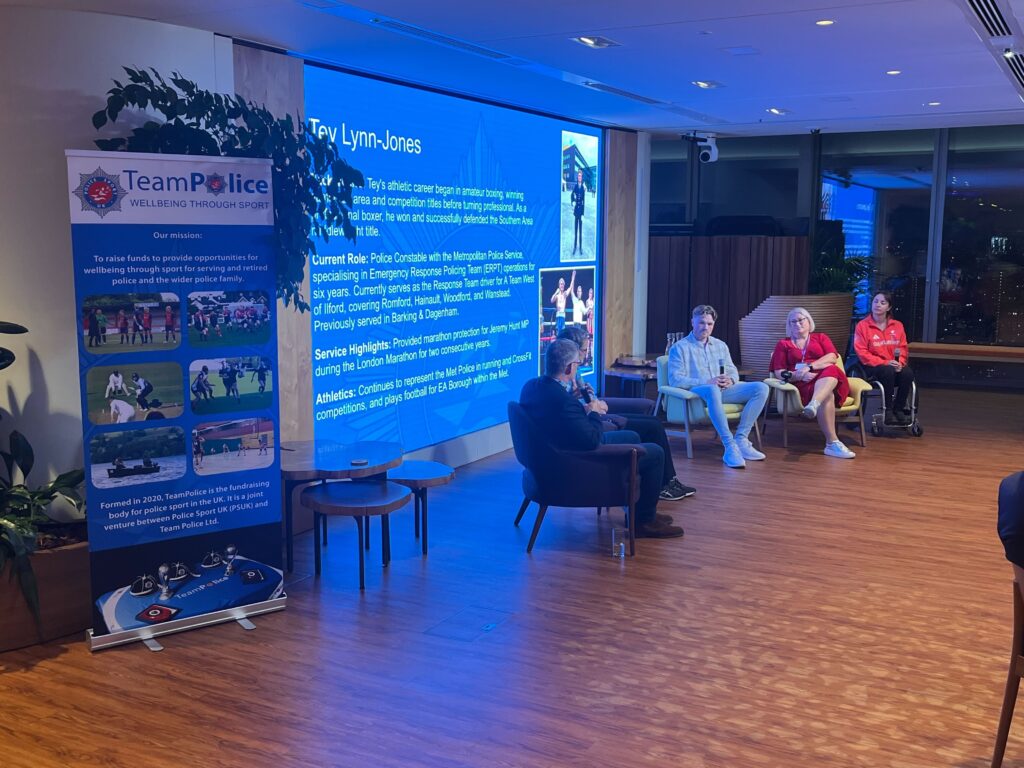
Our panel of speakers sharing their powerful insights on resilience through sport
Accessibility and Inclusion: Sport for Everyone
Tey also addressed a common barrier to participation: the misconception that you need to be naturally gifted to get involved.
“Whenever I put online about the running I do with PSUK, it’s ridiculous how many people want to do it, but they don’t realize that anyone can do it. They think, ‘Oh, I’m not a good enough runner.’ I have to reiterate to them: as long as you want to run, it doesn’t matter. You can just come down and have a go.”
Through his enthusiastic promotion and welcoming approach, Tey has successfully brought many more officers into running events, demonstrating that personal encouragement can break down perceived barriers to participation.
Claire Finn expanded on this theme, drawing from her experience working in IT where outdoor sports activities don’t appeal to everyone.
“I think we have to encourage kids who may not be naturally sporty, that there is a place for them. If it’s not a sport they can coach. If it’s cricket, they can do the scoring. They can still be part of a team in many different ways, even if they’re not gifted athletically.”
She applies this principle to her team’s summer socials, adapting activities each year to appeal to the most people—including introverted activities like board games alongside outdoor tournaments., ensuring events aren’t elitist in any way. Her role, as she described it with a smile, is usually “shouting very loudly at my team, sorry, encouraging them as a proper coach to do their best.”
The message was clear: sport should be for everybody, all inclusive and not elitist in any way, no matter whether you’re gifted naturally or you’re just enthusiastic and love to give it a go.
The Challenge: Fairness and Opportunity
One table raised a critical issue that resonated throughout the room: the ongoing challenge of fairness in accessing police sport opportunities.
Drawing parallels between youth sport and policing, they emphasized that giving people a fair opportunity to participate and be part of something is fundamental to building resilience. The discussion centered on how adults, whether parents, trainers, or teachers, always want to give young people a fair opportunity to participate and build their resilience. The same principle, they argued, should apply to police officers and staff.
However, time off for police officers to participate in team sports and events remains disjointed across forces. One former officer who served for nearly 20 years reflected on this experience, noting that even eight years after leaving policing, the same challenges persist.
“We don’t want to see the same faces at these events. We don’t want to see the same people at every Team Police event. We want to see a room full of cops, male and female, who are here to celebrate the fact that they’ve been able to take part in sporting events and represent their force nationally or internationally at the top level of police sport. Unfortunately for some forces that is impossible or certainly people feel that way.”
The call was clear: keep encouraging dialogue, keep pushing for police officers and staff to be rewarded for their dedication and hard work with the time to represent their forces. Fairness in opportunity isn’t just about sport, it’s about building resilience across the entire police family.
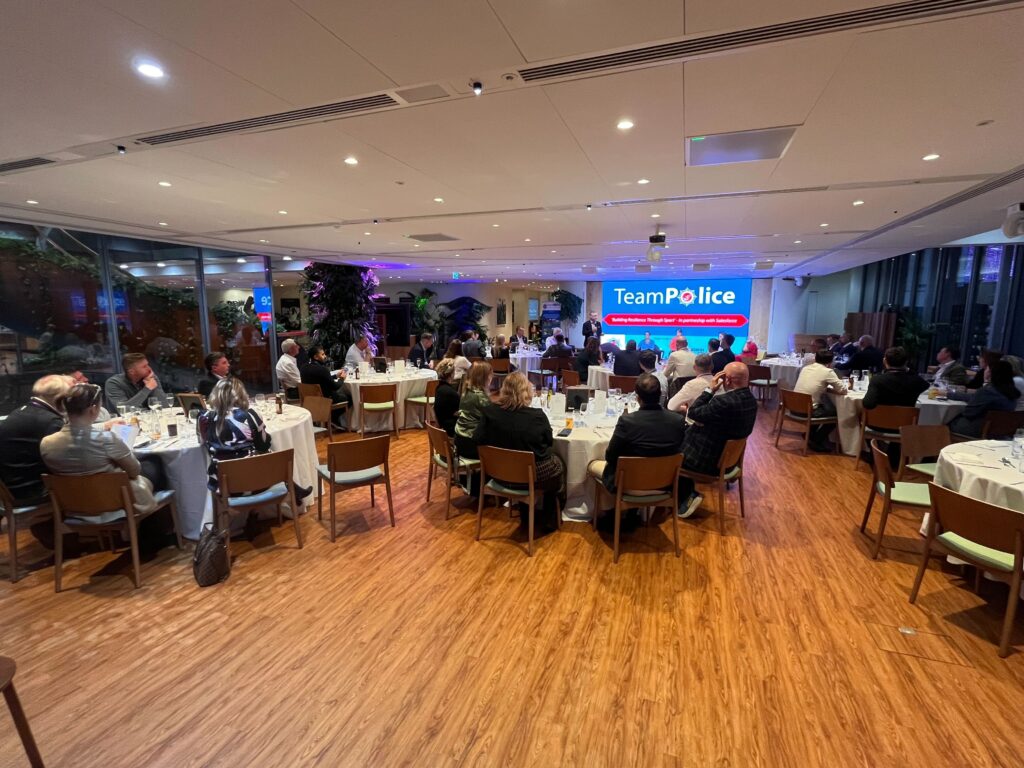
The Team Police community: united in our commitment to wellbeing through sport
The CEO’s Closing Challenge
As the evening drew toward its 9:00 PM closure, Dave Hartley, CEO of Police Sport UK, brought everyone together with a powerful call to action that synthesized everything discussed.
“You’ll never quite realize the impact that you are making in terms of your support. Right now there are colleagues on the front line who participate in police sport. They are facing either tragedy or fear in terms of conflict right now, and it will be their sport that builds the resilience that we talk about.”
He returned to the cricket player’s story as a concrete example of sport’s impact.
“When we say what would have happened, we could well have seen three months off, six months away from work, where there is no support. You can see people disappear and struggle for sometimes months and years.”
Dave emphasized that resilience comes from being in a good place, and whether you’re police or police staff, you face personal challenges including births, bereavements, and relationships, while also trying to deliver policing services and facing tragedy, fear, and sometimes boredom.
The Bottom Line: Three Pillars of Wellbeing
Sport improves:
– Physical Health – Building fitness and physical resilience to meet the demands of policing
– Psychological Health – Supporting mental wellbeing and providing crucial stress management tools
– Social Health – Creating connections, camaraderie, and support networks that last beyond the playing field
These are the three main pillars of wellbeing, and they all come from sport. The challenge now is to ensure every command team recognizes this.
“Forces now and senior officers are looking to try and say what can we externally bring in to promote wellbeing with our staff. Our collective challenge is: let’s turn it into ‘your number one to support wellbeing is sport.’ Police sport. Because it improves your physical health, your psychological health, and your social health.”
The challenge is clear: police sport must become the number one initiative for command teams around supporting their staff—whether police officers or police staff, it benefits everyone.
Making Sport the #1 Wellbeing Initiative
Together, we’re working to ensure every police force recognizes sport as the primary tool for building resilience and supporting wellbeing across their teams.
About Team Police
Team Police raises much-needed funds through an innovative commercial sponsorship scheme to help improve the wellbeing of everyone who is serving and has served in our UK Police Forces by enabling increased participation in sport and physical activity. Team Police Ltd is the fundraising body for Police Sport UK (PSUK).
Police Sport UK boasts a membership of over 300,000 serving police officers, police staff, retired officers and staff, plus their immediate families. Representing all police forces in the UK, it plays a major role in providing social and recreational activities for the membership. A comprehensive range of sporting sections provide competition at local, regional, national and international levels.
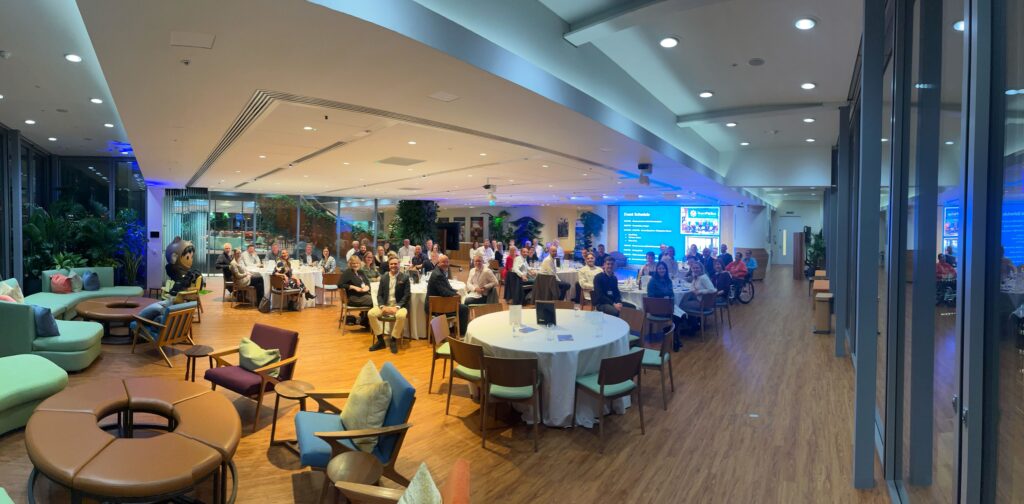
Thank you to everyone who made this evening possible
Thank You to Our Event Sponsors
Event Sponsor: Salesforce
Salesforce is a significant sponsor of Team Police and generously supported the hosting of this evening’s event in their magnificent Tower.
Reception Sponsor: Sopra Steria
Sopra Steria is a new sponsor of Team Police for 2025 and kindly supported the drinks reception.
Here’s to every officer, every staff member, and every teammate who shows up, on the pitch, in the pool, on the track, or simply there to support. You’re building more than fitness. You’re building resilience that saves careers and lives.